
Paris to South France: Planning the Drive
Driving from Paris to the south of France is one of the great European road trips. The total distance from Paris to Nice is approximately 940 km, and the drive — taken in one stretch on the A6/A7 “Autoroute du Soleil” — takes around 9 hours without stops. Most travellers sensibly split the journey over two days, overnighting in Lyon, Avignon, or Aix-en-Provence. The reward is extraordinary: landscapes shift from the flat farmland of the Brie to the limestone plateaux of Burgundy, the garrigue of the Rhône valley, and finally the olive groves and lavender fields of Provence.
The A6 from Paris to Lyon (460 km) passes through Burgundy’s wine country. Consider a detour off the motorway at Beaune to drive the D974 Route des Grands Crus through Gevrey-Chambertin, Nuits-Saint-Georges, and Meursault. This adds 45 minutes but delivers one of the world’s most celebrated wine landscapes. South of Lyon, the A7 runs alongside the Rhône river through the Côtes du Rhône appellations — look for the Mistral wind bending the cypresses as you approach Orange and Avignon.
Avignon is an excellent overnight stop at the halfway point. The medieval Palais des Papes dominates the old town, and the famous bridge (Pont Saint-Bénézet) is a ten-minute walk from most central hotels. Parking in Avignon is available in large pay garages near the ramparts at around €12–18 per night. From Avignon, the A8 leads east to Aix-en-Provence and then onward to the Côte d’Azur.
Suggested 5-Day Paris to South France Itinerary
- Day 1: Paris → Beaune (wine route) → Lyon (overnight)
- Day 2: Lyon → Pont du Gard (Roman aqueduct) → Avignon (overnight)
- Day 3: Avignon → Les Baux-de-Provence → Aix-en-Provence (overnight)
- Day 4: Aix → Cassis (calanques) → Marseille → Saint-Tropez (overnight)
- Day 5: Saint-Tropez → Cannes → Antibes → Nice
Toll costs on the full Paris–Nice run total approximately €75–80 each way. The Autoroute du Soleil is busy every weekend in July and August; departing on a Thursday evening or Saturday before 07:00 avoids the worst traffic. Real-time conditions are shown on the Bison Futé website (bison-fute.gouv.fr), which uses a colour-coded system to predict traffic density on major routes.
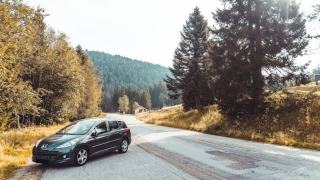
Fuel planning is straightforward on this route: motorway service areas are spaced every 40–60 km and all have 24-hour automated pumps. For cheaper fuel, plan a stop at a supermarket in Lyon, Avignon, or Aix — prices at Leclerc and Intermarché run 10–15 cents per litre below motorway prices. An automatic SUV or estate car is the practical choice for a trip of this scale: comfortable at 110 km/h for extended periods, enough boot space for a fortnight’s luggage, and capable of the occasional gravel car park at a remote vineyard or hilltop village.