
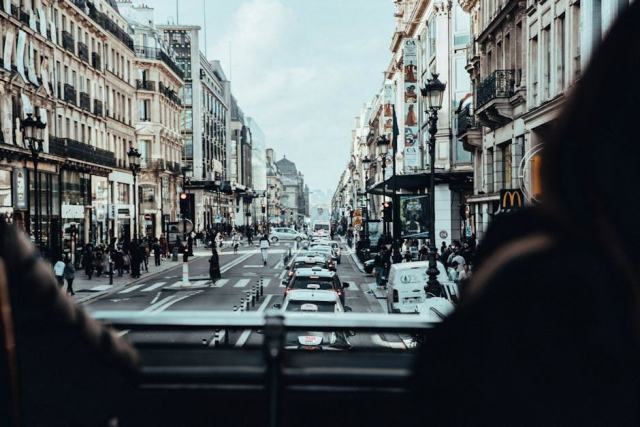
Driving in France as an American comes down to one early decision and a handful of road rules: book an automatic car unless you already drive a stick shift every week, and learn priority to the right, metric speed limits and toll booths before your first French road trip. A US license is accepted for a short visit, and the major motorways are easy to drive.
Gearbox: an American driver who learned on an automatic should reserve an automatic vehicle, with the gearbox confirmed in writing, because economy fleets in France still lean manual.
Paperwork: a valid US license, a passport and a credit card in the driver's name; an International Driving Permit (IDP) is a cheap safety net.
Road habits to unlearn: no right turn on red, no passing on the right, and yield to traffic coming from the right where no sign says otherwise.
Can Americans rent a car in France with a US license?
Americans can rent a car in France with the license issued by their home state, as long as it is valid, written in the Latin alphabet and held for the minimum period the rental company asks for, usually one year or more. French law recognizes a foreign license for visitors on a short stay; the situation changes only once you become a resident, when the license must be exchanged within a set period. The full list of documents a counter agent may ask for is set out in our visitor guide to licence requirements and paperwork.
The International Driving Permit (IDP) is a translation of your license, issued in the United States by AAA. It does not replace the US card, it travels with it. Many rental companies never ask for it, yet a police officer at a roadside check may find a booklet in French easier to read than a state card. For the small cost and the short wait, most travel forums recommend carrying one.
- Minimum driving age: rental companies generally set it at 21, with a young-driver surcharge under 25 and limits on premium categories.
- Credit card: the deposit is blocked on a credit card in the main driver's name; a debit card is refused by many counters.
- Proof of insurance: the rental contract includes third-party cover by law; collision cover is either bought at the desk or carried by your card issuer, which you should confirm before leaving home.
Manual or automatic: which gearbox suits an American driver?
An automatic gearbox is the right choice for almost every American visitor, because most drivers in the United States have never used a clutch, and a French road is a poor place to learn. France itself is a stick-shift country: a large share of the cars sold there over the last decades were manual, and rental fleets in the economy class still reflect that. Automatics are now common in mid-size, premium, hybrid and electric categories, which are automatic by design.
The table compares the two options on the points that matter for a visitor.
| Criterion | Manual car | Automatic car |
|---|---|---|
| Rental price | Lower end of the range, especially in small city cars | Higher in economy class, the gap narrows in larger categories |
| Availability in peak season | Wide choice, rarely sold out | Books out early in summer and around holidays |
| Paris traffic and old town streets | Tiring: constant clutch work, hill starts on cobbles | Much easier in stop-and-go traffic |
| Motorways and long road trips | Comfortable once in top gear | Equally comfortable, less fatigue on long days |
| Mountain roads (Alps, Pyrenees) | Fine for an experienced stick-shift driver | Safer for a newcomer, with engine braking on most modern models |
| Hybrid and electric options | None | All hybrids and EVs |
The verdict is simple to apply. If you drive a manual at home every week, a manual saves money on a motorway trip to the south. If you learned on an automatic, or have not touched a clutch in years, take the automatic, even for a single day. Juggling a gear lever with your right hand, unfamiliar French road signs and a roundabout full of scooters is the classic recipe for a stalled engine at a junction. Booking tips for this category are gathered in our page on automatic car rental and how to secure one in France.
The trap of the "or similar" booking
A rental booking in France usually reserves a category, not a model, and the words "or similar" hide a real risk for American travelers: in some categories, the similar vehicle can come with a manual gearbox. Choose a category whose code shows an automatic transmission, keep the confirmation email, and refuse a manual car at the desk if the contract says automatic. Arriving late on a Saturday in August, when the last automatics are gone, is when most of these disputes happen.
How does driving in France differ from driving in the US?
Driving in France differs from the US less in the car than in the habits: the French road network rewards anticipation, lane discipline and a precise reading of signs, and it punishes the reflexes that are normal on an American highway. Four differences surprise visitors more than any other.
- Priority to the right
- At an unmarked intersection, especially in villages and older city districts, the vehicle arriving from your right has priority, even if it comes from a small side street. A yellow diamond sign means you are on a priority road; the same diamond crossed by a black bar means the priority ends. Many rural intersections in Burgundy or Brittany carry no sign at all, and a tractor pulling out of a lane on your right still has priority at that intersection; slowing before each intersection in a village is the local reflex.
- No right turn on red
- A red light means stop, full stop. Turning right on red is not allowed in France, except for cyclists where a small specific sign authorizes it.
- No passing on the right
- On a motorway, you overtake on the left and return to the right lane afterwards. Staying in the middle lane or passing a slow vehicle on its right is an offense, and French drivers expect the left lane to be kept clear.
- Roundabouts
- Traffic already on a roundabout has priority over cars entering it, which is the reverse of the old priority to the right. Signal right before your exit.
Traffic lights are also placed differently: in many French towns the light sits on your side of the junction, not across it, so a driver who stops at the line may have to lean forward to see it change. Stop lines and pedestrian crossings are taken seriously, and a pedestrian waiting at a crossing has priority.
Speed limits in France and the speed cameras that enforce them
Speed limits in France are posted in kilometers per hour, and the speed limit signs show only a number in a red circle. Without a sign, the default limits apply, and they drop in rain for most road types. For an American driver, 130 km/h is about 81 mph and 50 km/h about 31 mph.
- Motorways (autoroutes): 130 km/h, 110 km/h in rain.
- Dual carriageways with a central barrier: 110 km/h, 100 km/h in rain.
- Two-lane country roads: 80 km/h by default, raised to 90 km/h on some roads chosen by the local authority, so the sign decides.
- Towns and villages: 50 km/h from the town name sign, often 30 km/h in centers.
- Paris: 30 km/h on most streets and 50 km/h on the ring road (boulevard périphérique).
Drivers who have held their license for less than three years face lower limits under French law, and the rule is applied to the license date, not to age. The detail for each road type, including the probationary limits, is listed in our table of French speed limits for rental drivers.
Speed cameras, called radars in French, line every major route. A radar can be fixed, mobile and mounted in unmarked cars, and some measure average speed over a section. The fine is sent to the rental company, which identifies the driver and passes the ticket on, usually with an administrative fee charged to your card. Apps that warn of the exact location of a mobile check are banned; the "danger zone" alerts in GPS apps are the legal version.
Toll roads, fuel and payment cards
Toll roads cover most of the French motorway network, and a long road trip from Paris to the south crosses several toll plazas. You take a ticket at the entrance and pay at the exit, or pay a fixed amount at open barriers near cities. Lanes marked with a credit card sign accept payment by card; lanes marked with a single orange "t" are reserved for electronic badges and should be avoided in a rental car without one.
American credit cards work at most toll booths and fuel pumps today, thanks to contactless payment, but automated machines sometimes refuse a card that has no PIN code, especially at night. Carrying a card with a PIN and a little cash in euros avoids a long wait at an unmanned barrier.
Gas stations along motorways are open around the clock; in the countryside, many close in the evening and on Sunday, leaving only an automated pump. French fuel names differ from the US ones:
- Gazole is diesel, usually with a yellow or black nozzle; putting gasoline in a diesel car is a costly mistake that rental insurance rarely covers.
- SP95, SP95-E10 and SP98 are unleaded gasoline grades; the rental contract or the fuel flap says which one the car takes.
Driving in Paris and the low-emission zone
Driving in Paris is the hardest part of any French road trip for a visitor, and the best plan is often to pick up the rental car on the day you leave the city, not the day you arrive. Public transportation covers the city well, parking is scarce and expensive, and the Arc de Triomphe roundabout, with a dozen avenues feeding into it and no lane markings, tests even local drivers.
Greater Paris also runs a low-emission zone. Cars driving in it must display a Crit'Air sticker showing their pollution class; rental vehicles are recent and normally carry a sticker already, but asking at pick-up costs nothing. Rules on low-emission zones have been debated in the French Parliament in 2025, so the current status of the zone is worth confirming on the official Crit'Air site before your trip.
Outside the capital, the picture changes quickly: once on the motorway, French roads are well maintained and well signed, and a rental car becomes the easiest way to explore the Loire Valley, Normandy or Provence, where trains do not reach the villages and vineyards.
Traffic laws Americans tend to break without knowing
French traffic laws contain a few rules that have no equivalent in most US states, and ignorance is not accepted as an excuse at a roadside police check. The ones below matter most for a visitor in a rental car.
- Blood alcohol limit: 0.5 g per liter of blood, about half the usual US limit of 0.08 %, and 0.2 g for drivers with a license under three years old. In practice, one glass of wine can be enough to reach it.
- Phone use: holding a phone while driving is banned, and so are earbuds and headsets, even for a hands-free call. Only the car's built-in system or a phone in a fixed cradle used as a GPS is allowed.
- Safety kit: every car must carry a high-visibility vest and a warning triangle; after a breakdown, put the vest on before stepping out of the car.
- Headlights and signals: flashing your headlights usually means "I am coming through", not "go ahead"; signal every lane change on the motorway.
- Children: children must travel in an approved child seat suited to their size, and the rental company can supply one if booked in advance.
An accident with a rental car is handled with the joint accident report form (constat amiable), which both drivers fill in and sign on the spot. It is usually in the glove box. Do not sign a report written in French that you do not understand: write "je ne comprends pas le français" next to your signature and call the rental company's assistance number.
Practical travel tips for the first day behind the wheel
The first hour is where most American travelers make their mistakes, usually tired after a night flight. A few practical steps make the start easier.
- Plan the first leg to avoid Paris rush hours; picking up at an airport outside peak times gives you an easier start on the motorway.
- Set the GPS to kilometers and French before leaving the parking lot, and learn the words "sortie" (exit), "péage" (toll), "toutes directions" (all directions) and "rappel" (reminder of the current limit).
- Adjust the mirrors, seat and air conditioning while parked, then follow the exit route on the map before you start the engine.
- Photograph the car on all sides at pick-up, including the windscreen and wheels.
- Note the fuel type and the gearbox on the contract, and test reverse gear before driving off: on many manual French cars, it requires lifting a ring under the gear knob.
- Leave a margin for a European breakdown cover number and the rental company's assistance line in your phone.
Once the first day is over, driving in France tends to feel calmer than expected: motorways are less crowded than US interstates outside holiday weekends, and the country rewards a slow road trip with small towns, markets and châteaux every few miles. More routes and guides for visitors start from our handbook for renting and driving a car in France.
Americans behind the wheel in France: gearbox, cameras and cards
Is it hard to drive in France as an American?
It is not hard for an American used to driving on highways: the French drive on the right, signs follow international conventions and motorways are excellent. The difficulty lies in old city centers, roundabouts, priority to the right and, for those who rent one, the manual gearbox.
Do I need an International Driving Permit in France?
A valid US license is accepted for a short stay, and many rental companies do not ask for an International Driving Permit. Carrying one is still advised, because it translates your license for a French police officer.
Can I rent an automatic car at short notice in France?
Automatic cars are available in most categories, but they book out quickly in summer. Reserve early, choose a category coded as automatic and keep the written confirmation.
What happens if a speed camera flashes my rental car?
The ticket goes to the rental company, which names you as the driver and forwards it, usually with an administrative fee charged to your card. You then pay the fine to the French authorities.