
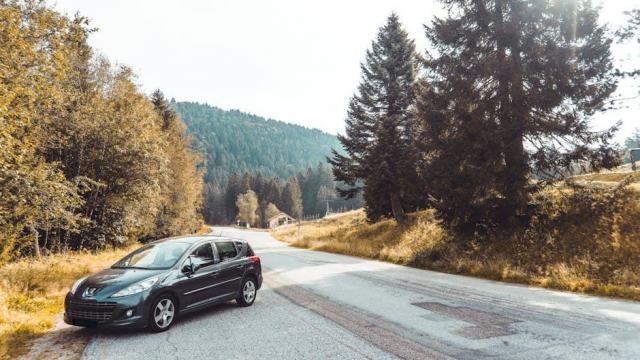
The Paris to Loire Valley drive is a road trip of about 240 km down the A10, and it leads to the most beautiful castles of the Loire: the Château de Chambord, Chenonceau over its river and the royal château of Blois. Travel by car lets you visit two or three châteaux a day, book a guided tour or a wine tasting, and explore local villages that no train reaches.
Loire Valley road trip at a glance
- Route: the A10 motorway via Orléans and Blois to Tours, the gateway to the Loire Valley castles.
- Châteaux: Chambord, Chenonceau, Cheverny and Villandry stand within an hour of each other on a beautiful stretch of the river.
- Travel tip: book château tickets and any guided tour ahead in summer, and base the trip in a local town rather than in Paris.
How long is the Paris to Loire Valley drive, and which road should you take?
The Paris to Loire Valley drive is one of the simplest long journeys a visitor can make in France: one motorway, the A10, links the capital to Orléans, Blois and Tours, and every town on the way has its own exit. From the Porte d'Orléans or the A6 junction south of Paris, the A10 runs south-west through the flat wheat plains of the Beauce. Orléans, where the Loire Valley really begins, is about 130 km away. Blois comes next at around 180 km, then Amboise and Tours at roughly 240 km.
Timing on the road is predictable once you are out of the city. Count about 1 hour 30 to Orléans and 2 hours 30 to Tours at the legal motorway speed, with one coffee stop at a service area. The real variable is leaving Paris: on a Friday evening or the first Saturday of the summer holidays, the first 30 km can take as long as the rest of the route. Starting before 8 am on a weekday, or after 10 am on a weekend, usually avoids the worst of it.
The A10 motorway via Orléans
The A10 is a paying motorway run by Vinci Autoroutes, with toll barriers where you pay by card or with an electronic tag; how the barriers and payment lanes work is explained in our notes on paying French motorway tolls. Service areas appear roughly every 30 to 40 km, with fuel, food and charging points for electric cars. For a first visit, leave the A10 at Blois if Chambord is your first stop, or at Amboise if you want to start with Chenonceau and Leonardo da Vinci's last home.
The slower road through Chartres and Vendôme
Travellers who prefer a scenic start can take the A11 toward Chartres, see the cathedral and its medieval stained glass, then follow the N10 south through Châteaudun and Vendôme to Tours. The route is longer, adds at least an hour of driving, and crosses small towns with roundabouts and reduced speed limits, but it turns the first day into a sightseeing day rather than a motorway transfer. Chartres cathedral is a UNESCO World Heritage site in its own right, and its blue stained glass windows from the 12th and 13th centuries are among the best preserved in Europe.
Leaving Paris behind the wheel
A car picked up in central Paris has to cross some of the busiest traffic in France before reaching the motorway. Picking up at Orly airport, south of the city and close to the A10, saves most of that stress. If you collect the car in the centre, the ring road (the Boulevard Périphérique) and its priority rules are the first test; our tips for driving inside Paris cover lanes, low-emission rules and the habits of local drivers. Once the A10 starts, the journey becomes easy: wide lanes, clear signs and few junctions.
Car, train or guided day tour: which way to explore the Loire Valley?
Exploring the Loire Valley by car is the most flexible option because the châteaux are spread over the countryside, often 15 to 30 km apart, and public transport between them is thin. The train is faster for reaching the region, and a guided day tour from Paris removes the driving entirely. The table compares the three ways to visit the Loire Valley from Paris.
| Option | Getting there | Between châteaux | Best for |
|---|---|---|---|
| Rental car | 2 to 2 hours 30 by the A10 | Total freedom, small roads, wine estates | Couples, family groups, stays of two days or more |
| Train | About 1 hour by TGV to Saint-Pierre-des-Corps, or by regional train from Austerlitz to Blois | Shuttles in season, bikes, taxis or a car hired on arrival | Travellers who do not want to drive out of Paris |
| Guided day tour | Coach or minivan from central Paris, early start | Fixed programme, usually two or three châteaux | A single day trip with no planning |
| Private tour | Driver and guide pick you up at your hotel | Programme chosen in advance with the guide | Small groups who want comfort and commentary |
A mixed solution suits many visitors: the train from Paris to Tours or Blois, then a rental car collected at the station. Several hire companies have desks at Saint-Pierre-des-Corps and in Tours city centre, which avoids Paris traffic altogether. The trade-off is less choice of models, especially for automatic cars, so book well ahead in summer. Guided tours booked online usually confirm the pick-up point by email the day before departure.
Renting a car for a Loire Valley road trip
Renting a car for the Loire is less demanding than renting one for a mountain or city trip. Roads are wide, gradients are gentle and parking near the châteaux is plentiful, so a compact car is enough for two people and a medium estate fits a family with luggage. Automatic gearboxes are less common in French rental fleets than in North America, so travellers who only drive automatic should reserve that category explicitly rather than hope for an upgrade.
A few practical points make the rental car journey smoother. Check the fuel policy (full-to-full is the most common), photograph the bodywork at pick-up, and ask whether the car has an electronic toll tag, since some hire firms install one and bill tolls afterwards. Drivers from outside the European Union should carry their national licence and, for some countries, an international driving permit. An electric car is a realistic choice: the A10 service areas have fast chargers, and many hotels and wine estates in the Loire now offer slow charging for guests.
One-way rentals are worth considering for a longer trip. Collecting the car in Paris and returning it in Tours, Nantes or even at a Brittany airport lets you continue west without driving back, at the cost of a one-way fee set by each rental company.
Which Loire Valley castles deserve a stop?
The Loire Valley castles number in the hundreds, from royal palaces to private manor houses, but a first road trip usually focuses on half a dozen famous names. The Loire Valley between Sully-sur-Loire and Chalonnes-sur-Loire, about 280 km of the river, was added to the UNESCO World Heritage list in 2000 as a cultural landscape. The châteaux below are all within an easy hour of each other by car, which makes them the natural backbone of a three-day route.
Château de Chambord
The Château de Chambord is the largest château of the Loire, built from 1519 for King François I in a walled hunting estate of more than 5,000 hectares, the largest enclosed park in Europe. Its double-helix staircase, two flights that climb around each other without ever meeting, is often linked to the ideas of Leonardo da Vinci, who lived in nearby Amboise at the time. The roof terraces, with their forest of chimneys and lanterns, give the best view over the estate. Allow at least two to three hours, and more if you rent a bike or an electric boat in the park.
Château de Chenonceau
The Château de Chenonceau spans the river Cher on a series of arches, a gallery that turns the building into a bridge. It is often called the château of the ladies, because women shaped its history: Diane de Poitiers laid out one garden, Catherine de Médicis added the gallery, and later owners protected it through the Revolution. Chenonceau is one of the most visited sites in France, so arriving at opening time or late in the afternoon gives a calmer visit. The gardens, the kitchens built into the piers and the maze take a good half-day.
Château royal de Blois
The Château royal de Blois sits in the middle of the city and shows four centuries of French architecture around one courtyard, from a Gothic hall to a classical wing. Its most famous feature is the open spiral staircase of the François I wing, a showpiece of early Renaissance design. Seven kings lived here, which makes it a compact lesson in royal history. The city is also the best base for the eastern châteaux: Chambord is about 16 km away and Cheverny about 15 km.
Amboise and the Clos Lucé
The Château d'Amboise overlooks the Loire from a rocky spur, and its Saint-Hubert chapel holds the tomb of Leonardo da Vinci. A few hundred metres away, the Clos Lucé is the manor where Leonardo spent the last three years of his life, from 1516 to his death in 1519, as a guest of François I. The house displays models of his machines, and the park shows large-scale versions you can touch, which makes it a strong stop for a family with children. The town is lively, with restaurants, hotels and a Sunday market by the river.
Cheverny, Villandry and Azay-le-Rideau
Cheverny is still owned by the family that built it in the 17th century, and its furnished rooms feel lived in; fans of Tintin will recognise the model for Marlinspike Hall, the house drawn by Hergé. Villandry is visited for its gardens rather than its rooms: terraces of ornamental box hedges, a water garden and a vast vegetable garden planted in geometric patterns. Azay-le-Rideau, set on an island in the Indre, is one of the most beautiful small châteaux of the region, its white walls reflected in the water.
Chaumont-sur-Loire and its contemporary art
The Domaine de Chaumont-sur-Loire, between Blois and Amboise, mixes a Renaissance castle with a programme of contemporary art installations and the International Garden Festival, held every year since 1992 from spring to autumn. It is a good choice for travellers who have already seen the classic châteaux de la Loire, or for a second visit to the region.
A three-day Loire Valley road trip itinerary
A Loire Valley road trip of three days covers the main châteaux without rushing, and the distances between stops stay short. The route below starts from Paris in the morning, moves west along the river, and returns from Tours by the A10 or the A85 and A11.
- First stage: Paris to Chambord in about two hours, visit of the château and park, then Cheverny in the late afternoon and a night in Blois.
- Second stage: morning at the Château royal de Blois, the scenic D952 along the Loire to Chaumont or Amboise, then Chenonceau in the late afternoon and a night in Amboise.
- Third stage: Clos Lucé early, Villandry gardens and Azay-le-Rideau, then the journey back to Paris, or west to Saumur and its troglodyte caves if you have one more night.
The table gives approximate distances and driving times between the stops of this itinerary, measured on the usual roads outside peak traffic.
| Leg | Distance | Driving time | Road |
|---|---|---|---|
| Paris to Chambord | about 180 km | about 2 hours | A10, exit Mer or Blois |
| Chambord to Cheverny | about 17 km | 20 minutes | D roads through the forest |
| Blois to Amboise | about 35 km | 35 to 40 minutes | D952 along the north bank |
| Amboise to Chenonceau | about 13 km | 15 minutes | D81 |
| Amboise to Villandry | about 45 km | 45 minutes | Via Tours |
| Tours to Paris | about 240 km | 2 hours 30 | A10 |
Each leg between châteaux stays under an hour, which leaves the middle of the day for visits and lunch. If you only have two nights, drop Cheverny or Azay-le-Rideau rather than squeezing four sites into one day: a château visit with gardens rarely takes less than two hours, and queues at Chambord and Chenonceau add time in high season.
Is a day trip from Paris to the Loire Valley realistic?
A day trip from Paris to the Loire Valley is possible, but only with a tight plan and two châteaux at most. With five hours on the road for the return journey, the remaining time covers Chambord in the morning and Chenonceau or Amboise in the afternoon, with a quick lunch in between. Leaving Paris at 7 am and returning after 9 pm is a long day for the driver, who should share the wheel or plan a coffee break on the way back.
The guided day tour is the easier version of the same idea. Coach operators leave from central Paris early in the morning and return in the evening, usually with Chambord, Chenonceau and sometimes Amboise on the programme, a tour guide on board and entrance tickets included or sold as an option. Among the day trips from Paris, the Loire is the longest, along with the Mont Saint-Michel, so a rental car and one night in the region often give a better return on the time spent travelling.
Loire Valley wine tasting when you are the one driving
Loire Valley wine is part of the trip: Vouvray and Montlouis around Tours make white wines from Chenin Blanc, Chinon and Bourgueil produce red wines from Cabernet Franc, and Saumur is known for its sparkling wine aged in tufa cellars. Many estates welcome visitors for a cellar tour and wine tasting, sometimes without booking, more often by appointment by phone or email, so check opening times before you set off.
A road trip with tastings needs one simple rule: the person who drives does not drink. French legal limits for drivers are low, and stricter for young and probationary drivers, so the practical answer is to let passengers taste, to use the spittoon, or to choose grape juice where the estate offers it. Buying bottles to open in the evening at the hotel is the easiest compromise, and a small cool box keeps white wines fresh in the boot. Some estates around Vouvray and Saumur also run guided tours of their caves, dug into the soft limestone, which are interesting even without tasting.
Roads, tolls, speed limits and parking around the châteaux
The roads of the Loire Valley are among the easiest in France for a visitor. The D952 follows the north bank of the Loire between Blois and Tours, the D751 the south bank between Amboise and Chaumont, and brown tourist signs point to every château and many wineries. Traffic is light outside towns, and the main challenge is the number of roundabouts, where vehicles already on the roundabout have priority.
Speed limits change between the motorway, main roads and villages, and speed cameras are common on the A10 and on the D roads near towns. Before setting off, read the French speed limits for rental drivers, including the lower limits that apply in rain and in built-up areas. Fines for speeding are sent to the hire company, which passes them on to the driver with an administration fee.
Parking is rarely a problem in the countryside. Chambord, Chenonceau and Villandry have large car parks near the entrance; some are paid, so keep a card handy. In Blois, Amboise and Tours, underground car parks close to the château are the most practical choice. Avoid leaving luggage visible in the car while you visit, as in any tourist area in Europe.
Best time to visit and where to stay in the Loire Valley
The best time to visit the Loire Valley by car is from April to June and in September, when gardens are in bloom or the grape harvest begins, roads are calm and châteaux are open with long hours. July and August bring summer evening shows, such as sound and light events at some châteaux, but also queues and full hotels. In winter, several châteaux reduce their opening hours, and smaller sites close, so check the official websites before planning a winter trip.
Visiting several châteaux from one base saves packing every night, so the choice of town matters. Compared with the big cities, the towns of the valley are small and walkable. Blois suits a trip focused on Chambord and Cheverny; Amboise is central for Chenonceau, Clos Lucé and the wine estates of Vouvray; Tours is the largest city, with the widest choice of hotels and a lively old town. Staying in a château hotel or a bed and breakfast in a wine estate is a popular way to enjoy the region. For a quiet stay in the Loire, small villages such as Chaumont or Montlouis offer guest houses within a short drive of the main sites.
Other ways to discover the valley from above or from the water complement the car. Hot air balloon flights over Amboise and Chenonceau run in good weather from spring to autumn, and traditional wooden boats offer trips on the Loire from several towns. The Loire à Vélo cycle route follows the river for hundreds of kilometres, and bikes can be rented by the day near most châteaux.
Extending the journey beyond the Loire
A Paris to Loire Valley road trip combines easily with other regions. Heading west from the valley, the A85 and A28 reach Normandy, and Tours to the Mont Saint-Michel takes roughly three hours, which makes a loop from Paris through the Loire châteaux, the Mont Saint-Michel and the Normandy coast possible in five or six days. Heading south, Poitiers and the Atlantic coast are within reach of Tours.
For a second excursion in the opposite direction, east of the capital, the Champagne route and its vineyard villages make a natural pair with the Loire: the same rental car, a different landscape of chalk cellars and hillside vineyards, and less than two hours from Paris.
Paris to the châteaux by car: timing, tolls and day trips
How long does the drive from Paris to the Loire Valley take?
The drive from Paris to the Loire Valley is about 130 km to Orléans, 180 km to Blois and 240 km to Tours by the A10 motorway, roughly two and a half hours to Tours with one short stop.
Which châteaux can you see in one day from Paris?
In one day from Paris, two châteaux are realistic: Chambord and Chenonceau, or Chambord and the Château d'Amboise, with about five hours of driving for the return journey.
Is the A10 motorway to the Loire Valley a toll road?
Yes, the A10 is a paying motorway between Paris and Tours, with barriers where you pay by card or with an electronic tag; the N10 through Chartres and Vendôme is free but slower.